Mamaku: A Handwritten Script Font for Every Creative Moment
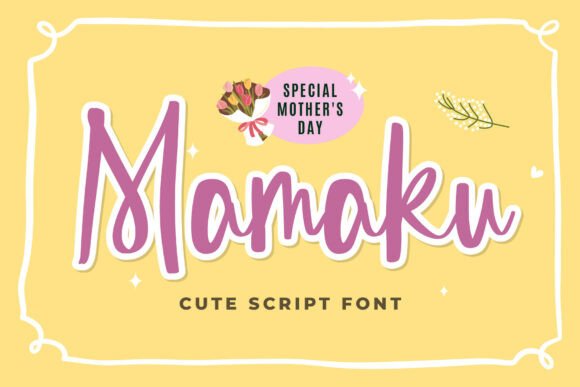
Finding a typeface that balances personality with professionalism is a common challenge. You need a font that feels personal and warm, but it must also be clear and functional across different mediums. Mamaku is a script font designed to meet that exact need. It’s a whimsical, “cute” handwritten typeface that brings a distinct sense of charm and approachability to any project. Think of it less as just letters and more as a design tool for adding a human touch. Its soft, bouncy curves and hand-drawn rhythm are crafted to evoke feelings of love and handmade care, making it a versatile asset for creators who want their work to feel genuine.
The true strength of a premium font like Mamaku lies in its practical application. While many decorative scripts sacrifice readability for style, Mamaku maintains clean lines and a consistent flow. This makes it surprisingly legible, even at smaller sizes or when used in longer phrases. For a designer, this is critical. A beautiful script font that no one can read defeats its purpose. Mamaku avoids that pitfall, ensuring your message is delivered with both style and clarity. It’s a creative font built for real-world use, not just for display in a font catalog.
Where Mamaku Truly Shines: Practical Applications
Understanding a font’s ideal use cases is key to leveraging its full potential. Mamaku’s friendly and approachable vibe makes it a natural fit for projects where connection and warmth are the goals. It’s less suited for corporate annual reports but perfect for anything aiming to build a personal rapport with the audience.
Branding and Logo Design
For small businesses, especially those in the handmade, boutique, or food industries, brand identity is everything. Mamaku can be a cornerstone of a logo for a local bakery, a children’s clothing line, or a florist. Its handwritten style communicates care, quality, and a personal touch. When used in logo design, it pairs exceptionally well with a simple sans serif font for body text, creating a visual hierarchy that is both elegant and accessible. The key is to use it for the business name or a tagline, not for lengthy descriptions, where a cleaner typeface would be more appropriate.
Digital and Social Media Content
In the fast-paced world of digital marketing, grabbing attention is paramount. Mamaku excels here. Its playful character makes it perfect for social media graphics, particularly Instagram quotes, story overlays, and promotional posts. The font’s bouncy rhythm creates movement on the screen, encouraging engagement. For bloggers and content creators, it can be used to highlight key phrases in graphics or as a stylistic element in YouTube thumbnails. When considering web design, it’s best used sparingly for headers or call-to-action phrases to add personality without compromising the site’s overall usability.
Print and Physical Products
The charm of Mamaku translates beautifully to physical items. This is where it becomes an invaluable design asset for crafters and entrepreneurs. Its smooth, clean edges are ideal for digital cutting machines like Cricut and Silhouette, ensuring crisp vinyl decals and heat transfers. Think custom t-shirts, tote bags, and mugs. For packaging design, it can add a delightful, artisanal feel to product labels or boxes. It’s also a superb choice for stationery—from wedding invitations and baby shower announcements to thank-you cards and personalized journals. The font’s personality helps make each piece feel one-of-a-kind.
Integrating Mamaku Into Your Design Workflow
Choosing the right font is only half the battle; using it effectively is what separates good design from great design. Here’s how to thoughtfully integrate a handwritten font like Mamaku into your projects.
Mastering Font Pairing
The most common question with display fonts is, “What do I pair it with?” A script font like Mamaku is high in personality, so it benefits from a quieter partner. A classic pairing is with a neutral serif font like Garamond or a geometric sans serif font like Montserrat or Lato. Use Mamaku for headlines, names, or short, impactful phrases. Use the paired font for all other text, including subheadings and body copy. This creates a clear visual hierarchy, guiding the reader’s eye and preventing the design from feeling chaotic or overwhelming.
Considering Readability and Context
Always test your chosen typeface in its intended environment. A font that looks beautiful in a design program might be difficult to read on a small mobile screen or when printed on textured paper. For Mamaku, consider its use in editorial design. It could be perfect for pull quotes or article titles in a lifestyle magazine, but it would be unsuitable for the main body text. When using it for merchandise, test how it looks on different colored fabrics or curved surfaces like a mug. Its legibility is a strength, but context is always king.
Leveraging the Included Assets
A quality commercial font comes with more than just basic letters. Mamaku is provided in OTF, TTF, and WOFF formats, covering you for desktop installation, web use, and compatibility with virtually all design software. It includes a full standard alphabet, numerals, punctuation, and symbols. Furthermore, it is PUA encoded. This is a significant practical benefit, as it means every character and stylistic alternate is easily accessible without needing specialized software, giving you more creative freedom right out of the box.
Ultimately, Mamaku is a modern typography